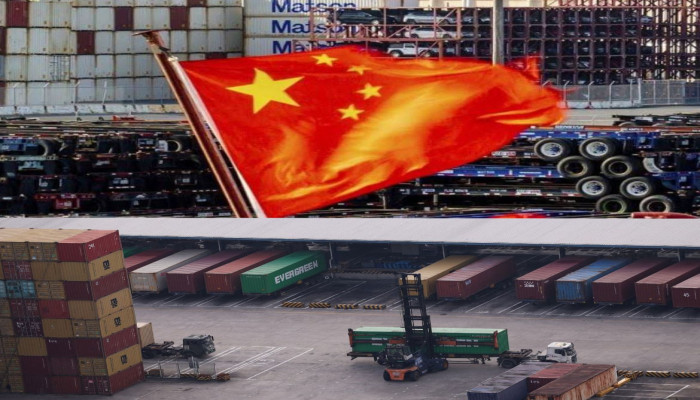
China closed out 2025 with a historic trade surplus, reaching nearly $1.2 trillion, even as rising tariffs and trade tensions with the United States continued under President Donald Trump. This unexpected outcome shows how China’s export‑driven economy adapted to shifting global China Record Trade Surplus demand and tariff pressures by diversifying its markets and boosting trade with other regions. Despite weak domestic demand and ongoing economic challenges at home, strong international sales — particularly outside the U.S. — helped sustain China’s growth last year.
What Is a Trade Surplus and Why It Matters
A trade surplus occurs when a country sells more goods and services abroad than it buys from other countries. For China, this balance widened dramatically in 2025 as exports grew faster than imports, widening the gap between what China sold and what it purchased from abroad. This surplus is a key economic statistic because it reflects export strength, manufacturing competitiveness, and global demand for Chinese products.
China’s surge to a record $1.2 trillion — up roughly 20% from 2024 — places it among the world’s largest trade surpluses ever recorded.
How China Achieved This Record Surplus
1. Exports Grew Abroad Even as U.S. Sales Dropped
Although exports to the United States fell sharply — around 20% in 2025 — Chinese products continued to find buyers in Africa, Southeast Asia, Europe and Latin America. Staple categories such as machinery, electronics, and even vehicles saw strong global demand, supporting overall export growth.
2. Other Markets Offset U.S. Declines
China’s manufacturers adjusted to the U.S. tariff environment by redirecting goods to emerging and established markets outside North America. Recent figures showed exports grew by about 5.5% overall in 2025, despite the U.S. slowdown.
3. Weak Domestic Demand Increased Reliance on Trade
China struggled with weak consumer spending and ongoing problems in its property sector, making exports an even bigger engine of growth. By relying on global trade, China managed to hit its official GDP target of roughly 5% for 2025, even though the final quarter slowed to about 4.5% growth.
Impact of Trump’s Tariffs on China’s Trade
President Donald Trump reintroduced steep tariffs on Chinese imports once back in office, intending to shrink the U.S. trade deficit and reduce reliance on Chinese manufacturing. While these tariffs did reduce direct exports to the U.S., they failed to halt China’s overall trade surge. Instead, by cutting off part of the U.S. market, tariffs accelerated China’s shift toward other regions and deepened its global trade footprint.
The result? China’s broader trade surplus not only continued but reached new heights, showing that higher tariffs alone did not reverse the country’s export competitiveness on the world stage.
Economic Challenges Behind the Numbers
While a record trade surplus appears strong on the surface, China’s economy faces several challenges:
- Weak consumer demand at home means exports carry disproportionate weight in GDP growth.
- Property sector troubles continue to drag on investment and household confidence.
- Analysts warn that relying too heavily on exports may not be sustainable if global protectionism rises further.
These factors suggest that simply selling more goods abroad won’t be enough for China to achieve long‑term balanced growth.
Global Trade and Future Outlook
China’s ability to post a record surplus despite rising tariffs underscores the country’s position within global supply chains. However, economists caution that future growth may require policies that stimulate local consumption and reduce overdependence on foreign markets.
Meanwhile, the world watches how trade policies, both in China and the U.S., evolve and how businesses adjust to these economic pressures.
Frequently Asked Questions (FAQs)
What does China’s record trade surplus mean?
China’s record surplus means it exported significantly more goods than it imported in 2025, generating nearly $1.2 trillion in trade earnings — a historic high.
Did Trump’s tariffs fail to slow China’s exports?
While U.S. tariffs did reduce exports to America, China compensated by selling more to other global markets, keeping its overall export growth strong.
Why are exports important for China’s economy?
Exports help drive economic growth, especially when domestic demand is weak. China’s reliance on exports helped it meet its GDP growth target in 2025.
Could the surplus continue in 2026?
Economists predict trade will remain strong, but slower global demand or higher tariffs elsewhere could reduce growth. Policymakers may need to boost domestic consumption.
What risks come with a large trade surplus?
A big surplus can strain international relations and trigger protectionist responses from other countries, potentially leading to new trade barriers.
Conclusion
China’s record $1.2 trillion trade surplus in 2025 reveals a complex global trade landscape. Despite renewed tariff barriers from the United States under President Trump, China successfully bolstered its exports by deepening trade links worldwide. While this achievement China Record Trade Surplus helped Beijing meet its growth goals, structural economic weaknesses at home and a heavy reliance on exports pose challenges for the future. As global trade dynamics continue to shift, China’s economic strategy will remain a key focus for policymakers and markets alike.